
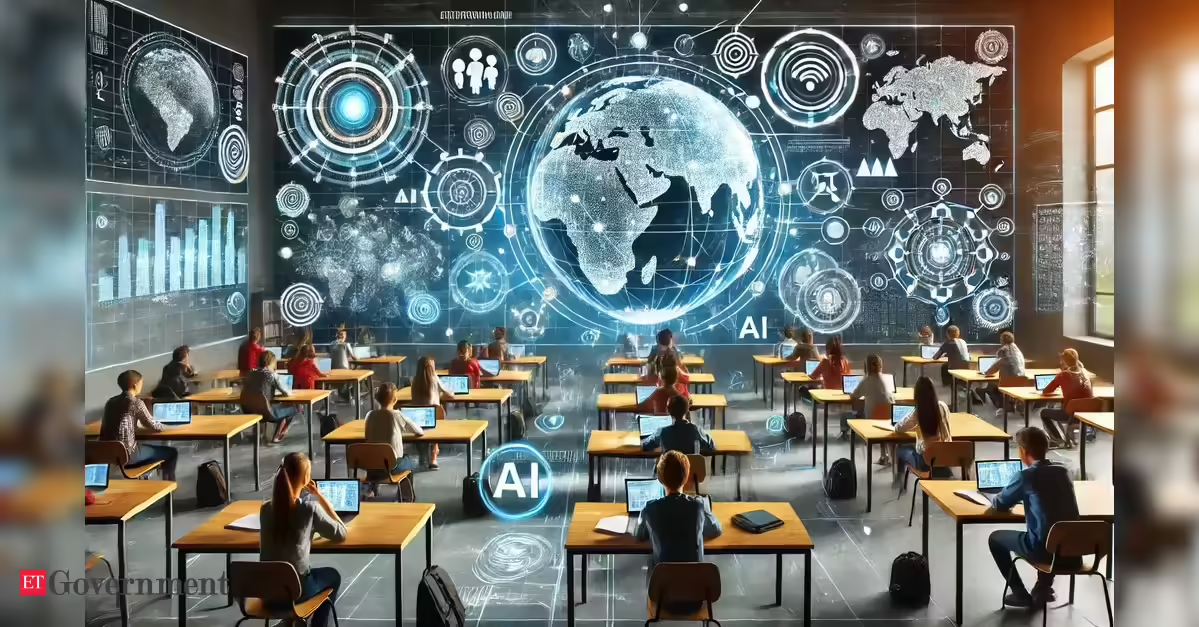
Artificial intelligence is reshaping education systems around the world by providing personalized learning experiences, enhancing teaching methods, and improving administrative efficiency. Schools, universities, and online platforms now use AI algorithms to assess student performance, identify learning gaps, and recommend tailored instructional materials. This technology ensures that learners receive individualized support while teachers can focus on creative and strategic aspects of education.
- AI-Powered Personalized Learning
- AI in Educational Administration
- Celebrity Influence in Education Advocacy
- AI and Global Learning Accessibility
- Ethical Considerations in AI Education
- FAQs
- How is AI transforming personalized learning?
- Can AI help with educational administration?
- Do celebrities influence education through AI?
- How does AI improve learning accessibility worldwide?
- What ethical challenges exist with AI in education?
- How will AI shape the future of global education?
- Conclusion
AI-Powered Personalized Learning
AI enhances education by analyzing student behavior, learning styles, and performance metrics to create customized curricula. Adaptive learning platforms adjust content delivery based on individual progress, ensuring that each student receives instruction suited to their abilities and needs. This personalization improves engagement, retention, and academic outcomes, bridging gaps in traditional classroom settings.
In addition, AI provides real-time feedback to both students and educators. Learning analytics help teachers identify struggling students early, monitor progress, and implement targeted interventions. By facilitating data-driven decision-making, AI empowers educators to optimize teaching strategies and create more effective learning environments for diverse student populations.
AI in Educational Administration
Artificial intelligence streamlines administrative tasks such as grading, scheduling, and resource allocation. Automated systems reduce manual workloads for educators, allowing them to dedicate more time to curriculum development, mentoring, and student engagement. These efficiencies improve the overall functioning of educational institutions and enhance the learning experience for students.
AI also supports predictive analytics for enrollment management, retention strategies, and resource planning. By anticipating student needs and institutional requirements, AI enables administrators to make informed decisions, optimize resource allocation, and improve operational efficiency. The integration of AI into educational administration is transforming how schools and universities function on a global scale.
Celebrity Influence in Education Advocacy
Celebrities and influencers are increasingly using AI-powered platforms to advocate for educational causes. By analyzing engagement metrics and audience demographics, public figures can design campaigns that resonate with diverse communities, promoting initiatives such as literacy programs, STEM education, and online learning accessibility.
This combination of AI insights and celebrity advocacy amplifies outreach efforts, encouraging participation and support from global audiences. By leveraging technology and influence, public figures can help bridge educational inequalities, inspire learners, and drive policy reforms that prioritize access to quality education worldwide.
AI and Global Learning Accessibility
Artificial intelligence is a key enabler of global learning accessibility, particularly in underserved regions. AI-powered tools provide remote learning solutions, multilingual content, and adaptive platforms that cater to diverse learners. These innovations reduce barriers to education, ensuring that students from various socioeconomic backgrounds can access quality learning opportunities.
Moreover, AI informs policy and program design by identifying gaps in access, resource allocation, and student outcomes. Policymakers and educational organizations can use AI insights to implement targeted interventions, optimize resource distribution, and enhance the effectiveness of global educational initiatives. AI is thus essential for promoting equity and inclusivity in education worldwide.
Ethical Considerations in AI Education
Despite its benefits, AI in education raises ethical concerns, including data privacy, algorithmic bias, and equitable access. Ensuring that AI tools are transparent, accountable, and designed to serve diverse student populations is crucial to maintaining trust and fairness in educational systems.
Educators, technologists, and policymakers must establish ethical frameworks that protect student data, mitigate bias, and promote responsible AI use. By addressing these challenges, AI can enhance learning outcomes, support educators, and contribute to a more equitable and inclusive global education ecosystem.
FAQs
How is AI transforming personalized learning?
AI analyzes student performance and learning styles to deliver customized curricula, improving engagement, retention, and outcomes.
Can AI help with educational administration?
Yes. AI automates tasks such as grading, scheduling, and resource allocation, allowing educators to focus on teaching and student support.
Do celebrities influence education through AI?
Celebrities use AI insights to design impactful campaigns, promote literacy, STEM education, and online learning accessibility globally.
How does AI improve learning accessibility worldwide?
AI provides adaptive platforms, multilingual content, and remote learning solutions, ensuring equitable access for students in underserved regions.
What ethical challenges exist with AI in education?
Challenges include data privacy, algorithmic bias, and ensuring equitable access, which require transparent and responsible AI practices.
How will AI shape the future of global education?
AI will enhance personalized learning, administrative efficiency, accessibility, and advocacy, creating a more inclusive, effective, and innovative education ecosystem.
Conclusion
Artificial intelligence is transforming global education by enabling personalized learning, improving administrative efficiency, and promoting accessibility for diverse populations. Combined with celebrity advocacy and public outreach, AI ensures that educational initiatives reach wider audiences and inspire meaningful engagement. Its integration into education systems worldwide is shaping a more equitable, innovative, and effective learning landscape.
Looking forward, ethical deployment, privacy protection, and equitable access will be essential to maximize AI’s benefits in education. By responsibly combining technology with advocacy efforts, educators, policymakers, and public figures can foster a global environment where quality learning is accessible, inclusive, and empowering for all.